The fruit of the Spirit is love, joy, peace, longsuffering, gentleness, goodness, faith, meekness, temperance: against such there is no law. Gal. 5:22, 23 {ML 50.1}
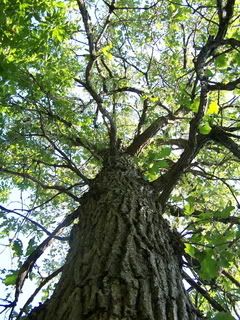
To all who believe, He is as the tree of life in the Paradise of God. His branches reach to this world, that the blessings which He has purchased for us may be brought within our reach. . . . He has given us a Comforter, the Holy Spirit, which will present to us the precious fruit from the tree of life. From this tree we may pluck and eat, and we may then guide others to it, that they also may eat. {ML 50.2}
The man who loves God meditates on the law of God day and night. He is instant in season and out of season. He bears the fruit of a branch vitally connected with the Vine. As he has opportunity, he does good; and everywhere, at all times and in all places, he finds opportunity to work for God. He is one of the Lord's evergreen trees; and he carries fragrance with him wherever he goes. A wholesome atmosphere surrounds his soul. The beauty of his well-ordered life and godly conversation inspires faith and hope and courage in others. This is Christianity in practice. Seek to be an evergreen tree. Wear the ornament of a meek and quiet spirit, which is in the sight of God of great price. Cherish the grace of love, joy, peace, longsuffering, gentleness. This is the fruit of the Christian tree. Planted by the rivers of water, it always brings forth its fruit in due season. {ML 50.3}
If we have the love of Christ in our souls, it will be a natural consequence for us to have all the other graces--joy, peace, longsuffering, gentleness, goodness, faith, meekness, temperance. . . . {ML 50.4}
When the love of Christ is enshrined in the heart, . . . His presence will be felt.
~E.G.White [My Life Today]
Thursday, February 14, 2008
Love

Saturday, September 1, 2007
A Favorite Hymn

____________
Abide with me; fast falls the even tide;
The darkness deepens; Lord, with me abide!
When other helpers fail, and comforts flee,
Help of the helpless, O abide with me!
Swift to its close ebbs out life's little day;
Earth's joys grow dim, its glories pass away;
Change and dacay in all around I see;
O Thou, who changest not, abide with me!
I need Thy presence every passing hour;
What but Thy grace can foil the tempter's power?
Who like Thyself my guide and stay can be?
Through cloud and sunshine, O abide with me!
I fear no foe, with Thee at hand to bless;
Ills have no weight, and tears no bitterness:
Where is death's sting? where, grave, thy victory?
I triumph still if Thou abide with me!
___________________________________
Luke 24:29
But they constrained him, saying, Abide with us:
for it is toward evening, and the day is far spent.
And He went n to tarry with them.
Saturday, July 7, 2007
The Two Gardens
“Arthur, will you lend me your knife to sharpen my pencil?” asked Mary Green of her brother, who was sitting at the opposite side of the table.
Arthur drew the knife from his pocket, and pushed it rudely toward her, saying, at the same time: “Now don’t cut your fingers off.”
The knife fell to the floor and Mary had trouble finding it, but her brother made no offer of assistance. He seemed engrossed in his geography lesson. At length he closed his books, exclaiming: “Well, I’m glad that lesson is learned.”
“Now will you please show me how to do this example before you begin to study again?” asked Mary. She had been puzzling over a question in subtraction.
“You are big enough to do your homework, I should think,” was the answer. “Let me see. What, this simple question? You must be stupid if you cannot do that. However, I suppose I must help you. Give me the pencil.”
The problem was soon explained to Mary’s satisfaction. Several hints given her as to those which followed prevented further difficulty. Arthur did not mean to be unkind to his sister; he loved to help her, though his manner seemed harsh and cross. Presently father sat down at the table where the children were studying.
“You are impolite, my son,” he said.
“I cannot always think about manners,” replied Arthur, rather rudely.
“Yet they are of great consequence, Arthur. A person whose intentions are really good, and who desires to be of use to his fellow beings, will hurt his chances of usefulness by unkind manners.”
“If we do what is right, father, I shouldn’t think it matters how we do it.”
“You are mistaken, Arthur. It makes a great deal of difference. This morning I visited a poor woman in the neighborhood. I couldn’t help her much, but for the little that I gave her she appeared deeply grateful. Finding that she had formerly been employed as a laundress by a man whose office is near mine, I asked why she did not apply to him for help. The tears came into her eyes as she replied: ‘Indeed, sir, I know he is very kind, and he has helped me before when things went hard; but he has such a harsh way of speaking. A penny with kindness is worth a dollar from those who hurt our hearts.
“Now, my son, I know this man to be a man of principle, but he has acquired a harsh, repulsive manner, which hides his good qualities. When you were helping your sister this evening you were unkind.” “But I did not feel unkind, father. Are not our feelings of more consequence than our manners?”
“Both are important, Arthur. It seems to me that kind feelings should produce kind manners.”
Arthur thought but little more of what his father had said. He did not improve his manners, and his playfellows said of him: “Arthur Green is a goodhearted boy, but so rude and cross in his manners. One would suppose he is angry even when he is doing a favor.”
Mr. Green had recently moved his family to a country home. Both Arthur and Mary liked the fresh air and the green fields. They asked their father to give them each a piece of ground for a garden and to show them how to prepare it for planting. This he agreed to do. Arthur did the most difficult work, but Mary was always ready to help. The brother and sister were fond of flowers, and looked forward to the time when they would be able to gather armfuls from their own garden. Their father gave them seeds and plants, and he helped them in the planting. Before many days little green leaves began to peep above the ground, and as the season advanced all the plants seemed to flourish.
“The seeds father gave me must have been different from those he gave you,” said Arthur to his sister, as they were weeding their gardens one day.
“I suppose he thought we would not want to have the same kinds of flowers,” replied Mary.
“No, of course not,” agreed Arthur; “but I don’t like the looks to my plants as well as I do yours. The leaves are coarser, and the buds don’t look as if they would make pretty flowers.”
Arthur grew more and more dissatisfied as Mary’s plants were covered with beautiful blossoms, while his own had either no flowers at all, or were pale and small. Having had no experience in gardening, he could not imagine the reason and complained to his father.
“I am sorry that you are not satisfied with your garden, my son,” was the reply. “The seeds that I gave you were the seeds of vegetables. When I last looked at them, they seemed to be growing fine.” “Vegetables, father!” exclaimed Arthur. “I wanted flowers. I didn’t want to have a vegetable garden.”
“I didn’t suppose you would care for flowers, Arthur. Of what use are they?”
“They may not be of much use, father; but they are beautiful. We like to look at them and to have them to give to our friends. Are not things useful which give pleasure?”
“I think so my son, but you seemed to have a different opinion. In preparing your garden, I avoided giving you those plants which posses beauty, even as you avoid cultivating what is beautiful and pleasing in your manners.”
Arthur was silent. He was struck with the truth of his father’s words. At length he said: “Well father, I will take good care of my vegetable garden this year. Every time I visit it I’ll think of what you said. When you see better words and manners in me will you give me a garden that is beautiful as well as useful?”
“I will, son.”
When another summer came, there had been a change in Arthur. The real kindness of his heart shone forth in his agreeable manners toward all around him. Flowers were blooming in his garden, and his father said: “These represent kindness and love.”